


What is the Science of Reading?
 What is the Science of Reading?
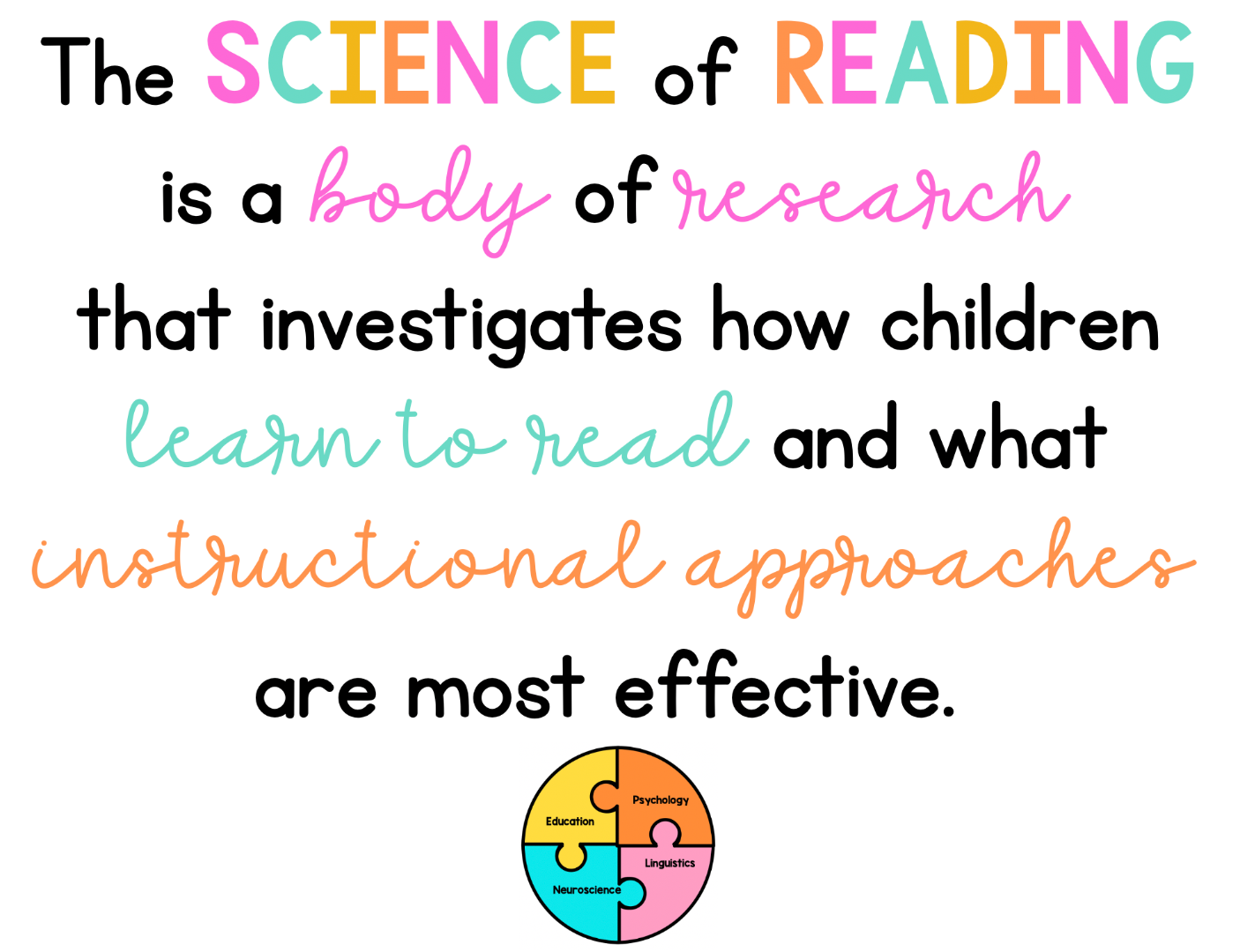
Have you heard or seen information about the Science of Reading? Well, what exactly is the Science of Reading and what does it mean? The Science of Reading is a comprehensive body of evidence from over 50 years of interdisciplinary research - including cognitive psychology, neuroscience, and linguistics - that defines how the BRAIN learns to read. It emphasizes explicit, systematic instruction in phonological awareness, phonics, fluency, vocabulary, and comprehension.
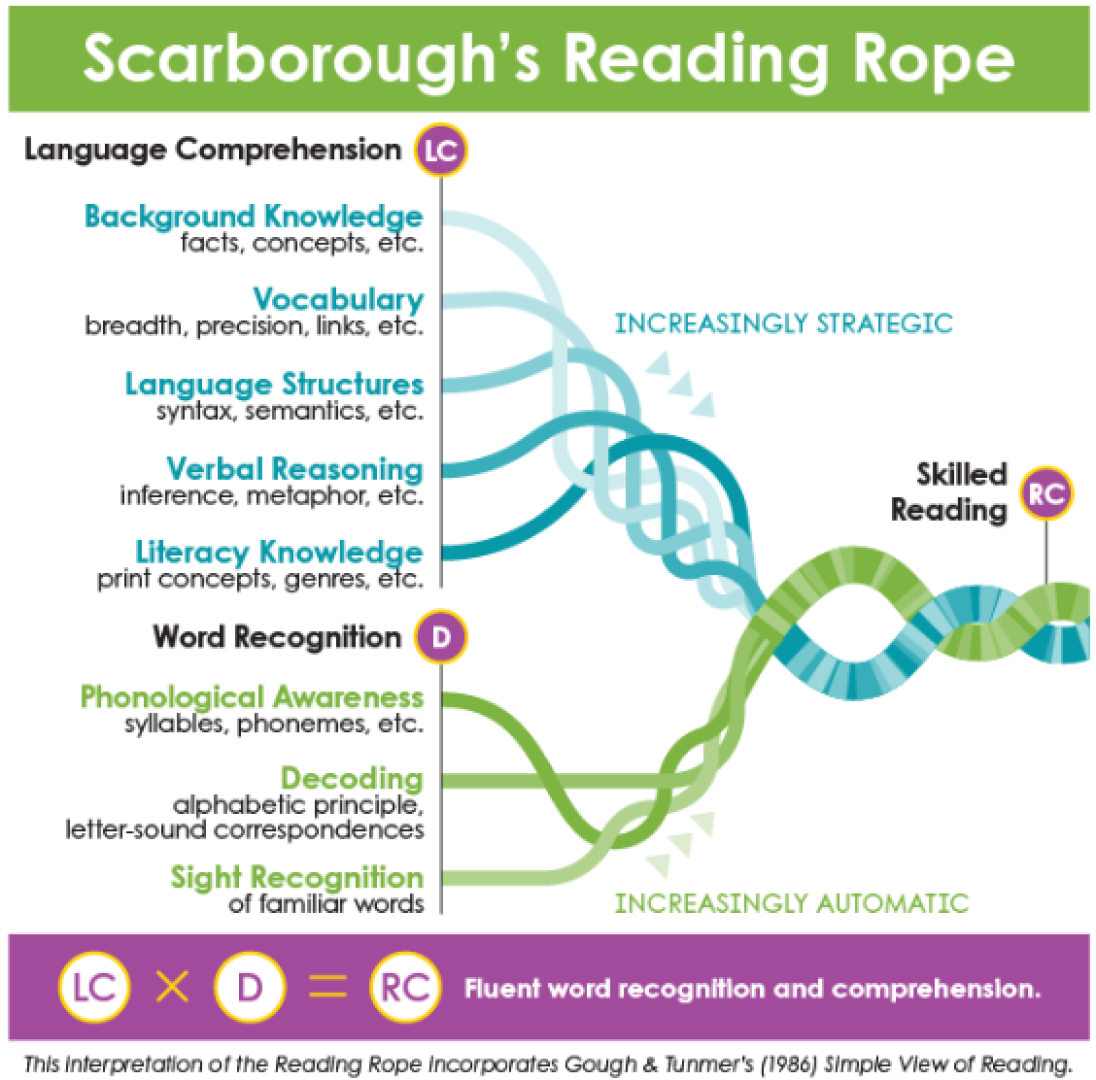
- Simple View of Reading: Proposes that reading comprehension is the product of language comprehension and decoding (word recognition) (LCxD=RC)
- Scarborough’s Reading Rope: Illustrates how word recognition (phonological awareness, decoding, sight recognition) and language comprehension (background knowledge, vocabulary, language structures) become increasingly automatic and intertwined.
Benefits of the Science of Reading
- Improved Outcomes: Leads to better reading achievement for all students, including those with dyslexia.
- Preventative Approach: Reduces the need for later, more intensive interventions by ensuring foundational skills are mastered early.
- Evidence-Based: Replaces unproven methods with practices backed by data, ensuring effective classroom instruction.
Beginning July 1, 2028, Kansas will require specific educators (PreK-6, special education, reading specialists) to demonstrate proficiency in the science of reading to renew or obtain their professional teaching license. After completing approved training (like LETRS or Keys to Literacy) or passing a state-approved exam, these teachers will have the “Seal of Literacy” on their teaching license.

